Jeanne de Salzmann
Madame de Salzmann (1889–1990)
Jeanne de Salzmann, born Jeanne-Marie Allemand and generally known as Madame de Salzmann, was a French-Swiss musician, dancer and teacher who became the closest pupil of the Greek-Armenian spiritual teacher George Gurdjieff. After Gurdjieff’s death in 1949, she assumed a leading responsibility for the continuation of his teaching and for preserving the inner meaning and practice of the Gurdjieff Movements.
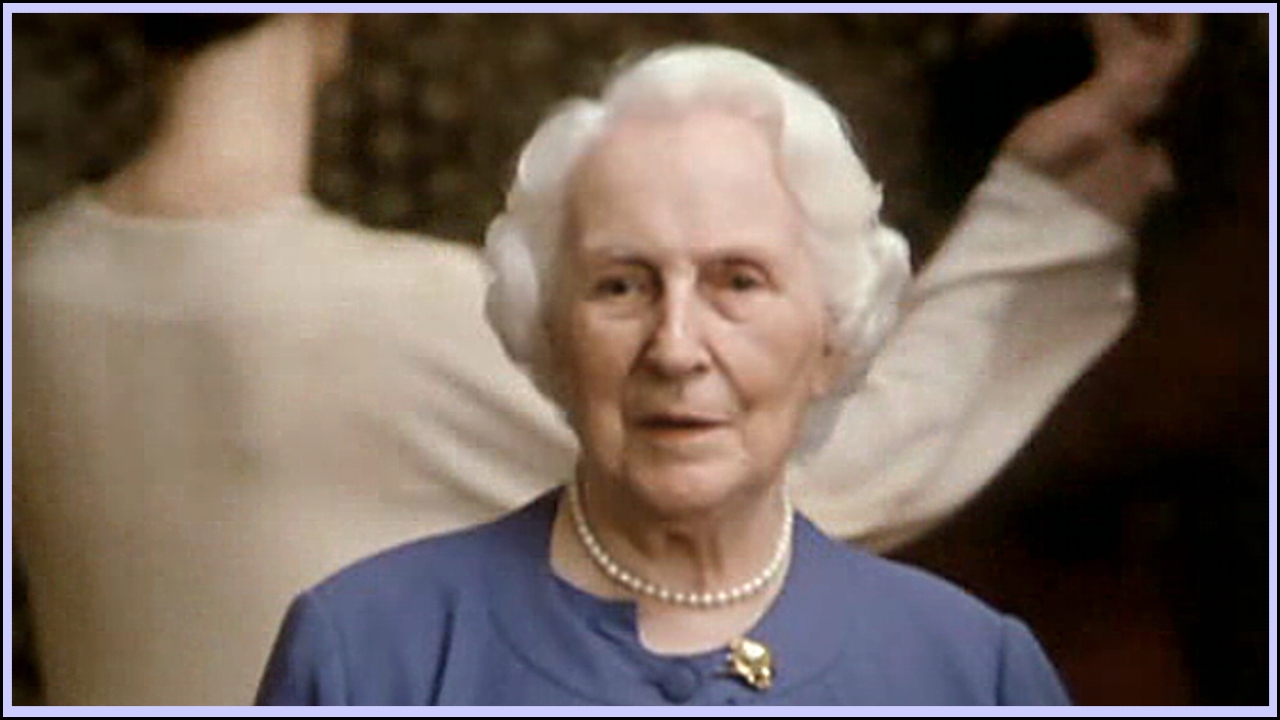
Who was Jeanne de Salzmann?
Jeanne de Salzmann was born Jeanne-Marie Allemand on 26 January 1889 in Reims, France. She became known principally through her long association with George Ivanovitch Gurdjieff, with whom she worked from 1919 until his death in Paris in 1949.
Madame de Salzmann combined a highly developed musical and physical training with a sustained practical study of Gurdjieff’s teaching. She became particularly closely associated with the teaching and preservation of the sacred dances and exercises usually called the Gurdjieff Movements.
Following Gurdjieff’s death, she guided groups of pupils in several countries and sought to preserve the teaching as a living practical discipline rather than merely as a body of philosophical ideas.
Early life and musical training
Jeanne-Marie Allemand was the daughter of the Swiss architect Jules Louis Allemand and Marie Louise Matignon. She studied piano at the Conservatory of Geneva and later became a student of the musician and educational reformer Émile Jaques-Dalcroze.
At the Dalcroze Institute in Hellerau, near Dresden, she studied and taught rhythm, movement and the relationship between musical perception and bodily expression. This training would later provide an important foundation for her work with Gurdjieff’s Movements.
At Hellerau she met the Russian painter and stage designer Alexandre de Salzmann, whom she married. During the First World War, after the activities of the Hellerau Institute were disrupted, Jeanne and Alexandre de Salzmann moved to Tiflis, now Tbilisi, in Georgia.
Jeanne de Salzmann’s meeting with Gurdjieff
In Tiflis in 1919, Jeanne and Alexandre de Salzmann were introduced to Gurdjieff through the composer Thomas de Hartmann and his wife Olga de Hartmann. Jeanne de Salzmann thereafter became one of Gurdjieff’s closest pupils.
Her background in music, rhythm and movement made her particularly receptive to the practical and physical dimension of Gurdjieff’s teaching. She participated in the development and presentation of the Movements and remained closely involved in Gurdjieff’s work for approximately thirty years.
Her work with G. I. Gurdjieff
Jeanne de Salzmann accompanied the development of Gurdjieff’s teaching through its different periods in Tiflis, Constantinople, France and Paris. Her work included the study and transmission of the Movements, the direction of pupils and the practical investigation of attention, sensation and presence.
She was not simply a performer or instructor of dances. Within Gurdjieff’s teaching, the Movements were understood as exercises requiring the simultaneous participation of the body, feeling and thought. Madame de Salzmann’s responsibility was therefore connected with the inner purpose of the exercises as well as their outward form.
Gurdjieff died in Paris on 29 October 1949. By that time, Jeanne de Salzmann was widely recognised among his pupils as the person principally entrusted with continuing the practical transmission of his work.
Jeanne de Salzmann’s work after 1949
After Gurdjieff’s death, Madame de Salzmann took a leading role in bringing together pupils who had worked with him during different periods. She helped establish and guide organisations and groups devoted to the study of his teaching in France, Britain, the United States and other countries.
Her principal concern was the direct experience of a more conscious attention. She repeatedly emphasised that Gurdjieff’s ideas could not be understood solely through intellectual study, but required sustained observation and practical work upon oneself.
She continued this work until her death in Paris on 24 May 1990, aged 101.
Jeanne de Salzmann and the Gurdjieff Movements
Jeanne de Salzmann played a central role in preserving and transmitting the exercises known as the Gurdjieff Movements. These include rhythmic exercises, dances, gestures, postures and coordinated sequences accompanied by music.
Their outward precision is only one aspect of the work. The pupil is required to maintain an active attention while carrying out different movements with separate parts of the body. The resulting demand can reveal habitual tensions, mechanical reactions and the instability of ordinary attention.
Madame de Salzmann was also responsible for arranging the filming of a number of Movements. These films preserved important material that might otherwise have been lost and created a visual record of the manner in which the Movements were transmitted by Gurdjieff’s direct pupils.
Madame de Salzmann and the Gurdjieff Movements
This archival film presents Jeanne de Salzmann in connection with the Gurdjieff Movements and illustrates the importance she attached to their preservation and transmission. It also offers a rare visual record of the influence of Gurdjieff’s teaching upon his closest pupil.
About the film
Madame de Salzmann worked with Gurdjieff for more than thirty years. The film provides an opportunity to observe her presence, attention and manner of working, as well as examples of the Movements whose preservation became one of her principal responsibilities.
The Reality of Being
The Reality of Being: The Fourth Way of Gurdjieff was published after Jeanne de Salzmann’s death and was compiled from notebooks recording many years of her observations and work.
The book is concerned principally with the practical need for a different quality of attention and with the relationship between thought, feeling and bodily sensation. It provides an important written record of the direction in which Madame de Salzmann developed the work entrusted to her after Gurdjieff’s death.
Jeanne de Salzmann’s legacy
Jeanne de Salzmann’s influence extended beyond the pupils who worked with her directly. Through the groups she guided, the Movements she preserved and the practical direction she gave to Gurdjieff’s ideas, she shaped the principal form in which his teaching continued during the second half of the twentieth century.
She also played an important part in the development of Peter Brook’s film Meetings with Remarkable Men, released in 1979 and based upon Gurdjieff’s autobiographical book of the same name.
After her death, responsibility for the continuation of the work passed principally to her son, Michael de Salzmann.
Chronology of Jeanne de Salzmann
- 1889
- Born Jeanne-Marie Allemand in Reims on 26 January.
- 1912
- Studied piano at the Conservatory of Geneva.
- 1912
- Studied rhythmic movement with Émile Jaques-Dalcroze at Hellerau.
- 1912
- Married Alexandre de Salzmann.
- 1919
- Met G. I. Gurdjieff in Tiflis.
- 1949
- Assumed a leading responsibility for continuing Gurdjieff’s teaching after his death.
- 1979
- Contributed to Peter Brook’s film Meetings with Remarkable Men.
- 1990
- Died in Paris on 24 May, aged 101.
- 2010
- The Reality of Being was published posthumously.
Sources and further reading
- Jeanne de Salzmann, The Reality of Being, Shambala Publications 2010